Associated Medical Schools of New York
  • About
    • Programs
    • AMSNY Scholars in Medicine and Science
    • AMSNY Scholarship in Medicine
    • Research
    • NYFIRST
    • ECRIP
    • SCIRP
    • Biomedical Research and Economic Development
    • Science Forward
    • Advocacy
    • State Positions
    • Federal Positions
  • News
  • Contact
Newsletter > Biomedical Research News from AMSNY: November 2025

11/24/2025

Biomedical Research News from AMSNY: November 2025

Highlights

SUNY Downstate Health Sciences University: Researchers Awarded Dual NIH Grants to Transform HIV Care

Two researchers from the Department of Medicine’s STAR Program at Downstate have received prestigious NIH grants to advance health equity through innovative HIV research. Their projects reflect Downstate’s mission to combine diagnostic innovation with insight into the social factors shaping prevention and care in underserved communities. Learn More

Zucker School of Medicine at Hofstra Northwell: Blood Pressure Drug Can Reverse ASD-like Behaviors in Some Cases, Study Finds

Benjamin Spielman, a fourth-year medical student at the Zucker School of Medicine at Hofstra/Northwell, led a study that found the widely used blood pressure medication captopril can restore healthy function to the brain’s immune cells and reverse Autism Spectrum Disorder–like behaviors in a preclinical animal model. Learn More

Cardiology

Jacobs School of Medicine & Biomedical Sciences at University at Buffalo: Older Adults That Have Prediabetes, Low Education Levels at Highest Risk for Cardiovascular Complications

It’s estimated that nearly half of adults aged 65 and older are living with prediabetes, a condition that predisposes them to developing Type 2 diabetes and puts them at higher risk for cardiovascular complications. Now, a UB study published in August in Aging-US.com has examined how multiple social risk factors in older adults with prediabetes may put them at increased risk for cardiovascular complications. Learn More

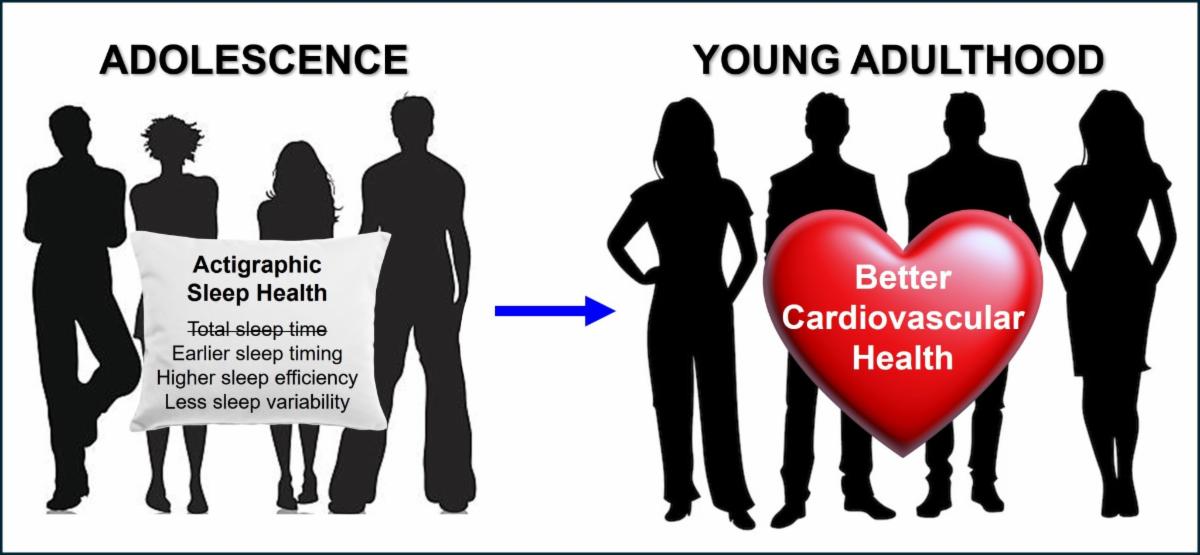
Renaissance School of Medicine at Stony Brook University: Sleep Regularity and Other Sleep Habits in Adolescence Predict Young Adult Heart Health

A study of 307 youth from a diverse population across the United States whose health data were documented from birth into adulthood revealed that earlier sleep timing, more efficient sleep, and less variable sleep patterns during adolescence predicted better young adult cardiovascular health (CVH). Led by researchers in Stony Brook University’s Program in Public Health, the study findings are published in JACC: Advances. Learn more

Cancer

Albert Einstein College of Medicine: Study Shows HPV Vaccine Protects Vaccinated—and Unvaccinated—Women

A large, long-term study led by an Albert Einstein College of Medicine researcher has found that the introduction of human papillomavirus (HPV) vaccine in community settings is highly effective in protecting young women from infections caused by the cervical-cancer-causing virus—including women who didn’t even receive the vaccine. The study was published in JAMA Pediatrics. Learn More

Columbia University Vagelos College of Physicians and Surgeons: Herbert Irving Comprehensive Cancer Center Earns Renewal from the National Cancer Institute

The Herbert Irving Comprehensive Cancer Center (HICCC) at NewYork-Presbyterian/Columbia University Irving Medical Center has been renewed as a Comprehensive Cancer Center by the National Cancer Institute (NCI), the nation’s largest funder of cancer research. The five-year renewal comes with a $26.9 million Cancer Center Support Grant, strengthening HICCC’s cancer research and patient care that serves a catchment area of 11 million people in the New York City metropolitan region and beyond. Learn More

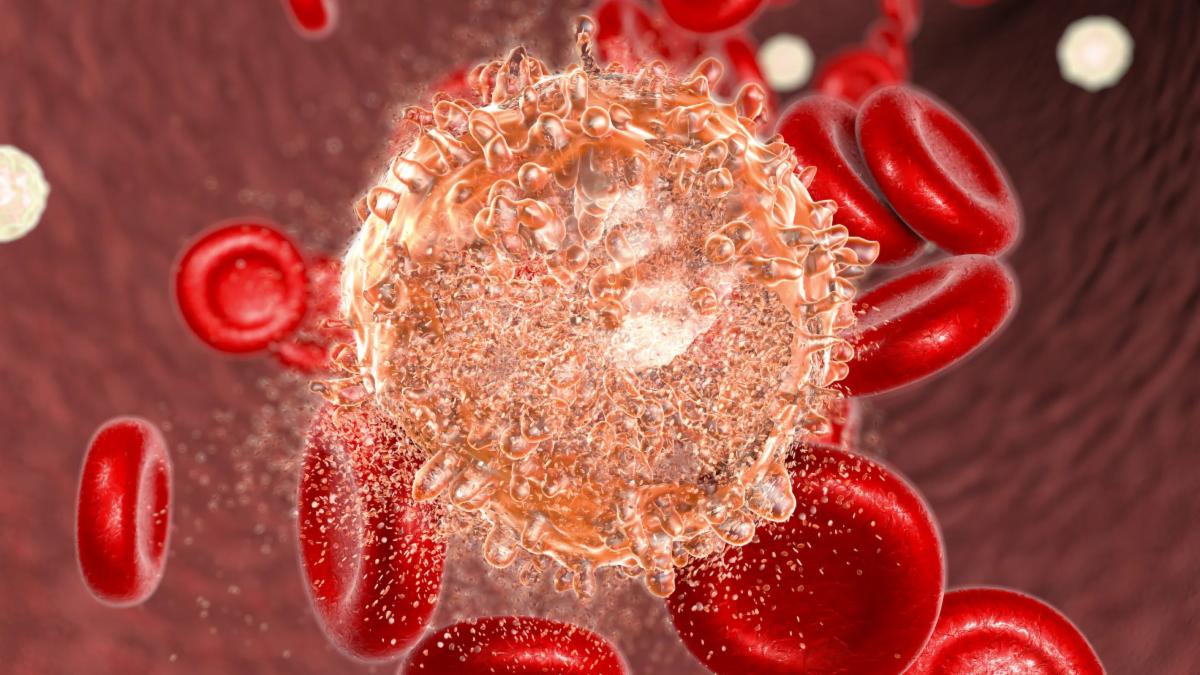
Albert Einstein College of Medicine: 9/11 Study Shows How Toxic Exposures May Lead to Blood Cancers

A study led by researchers at the National Cancer Institute-designated Montefiore Einstein Comprehensive Cancer Center (MECCC) has found that mutations in blood-forming cells may explain the increased risk for leukemia and other blood disorders among first responders exposed to the 9/11 World Trade Center (WTC) disaster site and its toxic dust. The study also points to a novel strategy for use against inflammation and blood disorders associated with environmental toxins. The research was published today in Cancer Discovery, a journal of the American Association for Cancer Research. Learn More

Genetics

Columbia University Vagelos College of Physicians and Surgeons: Gene Therapy May Offer New Hope for Infants with Rare, Fatal Disorder

In 1962, a pediatric neurology resident at Columbia’s Neurological Institute and his colleagues in the College of Physicians and Surgeons published a detailed paper in Pediatrics describing a new syndrome of neurodegeneration in male infants. The resident, John Menkes, MD, had seen the index case a few years earlier at Babies Hospital (now Morgan Stanley Children’s Hospital at NewYork-Presbyterian/Columbia University Irving Medical Center). The boy had met early developmental milestones such as head control and smiling by six weeks of age. But then the infant abruptly regressed. He lost weight and muscle control and soon developed frequent seizures. Nothing Menkes did seemed to help, and the child died at 18 months of age. Learn More

Weill Cornell Medicine: Researchers Unveil a Powerful New Gene-Switch Tool

Investigators at Weill Cornell Medicine have developed a versatile and non-toxic technology for controlling the activity of any gene in a cell. Such “gene-switch” tools allow scientists to “turn on” or “turn off” a target gene to study how it works, model diseases and design new therapies. The tool potentially could be adopted throughout biomedical research, including in the development of gene therapies. The new tool, called Cyclone (acyclovir-controlled poison exon), is described in a paper published Nov. 3 in Nature Methods. Learn More

Neurology

New York Medical College: Study in JAMA Neurology Reveals Positive Treatment Outcomes for Focal Epilepsy

Epilepsy affects approximately 65 million people worldwide, with 60 percent experiencing focal seizures. Most people with newly diagnosed focal epilepsy can become seizure-free, but it often takes more than one medication and some patience, according to a new study published by Manisha Holmes, M.D., associate professor of neurology at New York Medical College, along with a group of international researchers, in JAMA Neurology. Learn More

Renaissance School of Medicine at Stony Brook University: Could Imaging Brain Dopamine Levels be Key to Understanding Chronic Depression?

A new brain imaging study led by researchers in the Department of Psychiatry and Behavioral Health in the Renaissance School of Medicine (RSOM) at Stony Brook University, and published in JAMA Network, uses a specialized type of magnetic resonance imaging (MRI) technique named neuromelanin-sensitive MRI to shed light on the link between chronic depression and the neurotransmitter dopamine. Dopamine plays important roles in many cognitive, emotional, and bodily functions and is a central cellular component to the reward/motivation system of the brain. Learn More

Weill Cornell Medicine: More Exposure to Mother’s Voice After Birth May Prevent Preemies’ Language Delays

Among preterm newborns, greater exposure to the mother’s voice after birth appeared to speed up the maturation of a key language-related brain circuit, in a small clinical trial conducted by investigators at Weill Cornell Medicine, Burke Neurological Institute and Stanford Medicine. The finding provides direct experimental support for the idea that a mother’s voice promotes her child’s early language-related brain development. It also hints that boosting exposure to maternal speech might ameliorate the language development delays often seen among children born prematurely. Learn More

More Studies

Albany Medical College: System Partnership Advances Research, Bolsters Patient Care Options for Kidney Patients

A research collaboration between Saratoga Hospital’s Nephrology Division and Albany Medical College is advancing home hemodialysis therapy for patients with end-stage kidney disease (ESKD) or renal failure.

“When patients are proactive in their treatment, they do better and feel better,” said Rachid Daoui, MD, nephrologist. He has a strong interest in home hemodialysis—a process where an artificial kidney cleans blood of waste products and excess fluid before returning it to the body. Patients able to complete this process at home have a lower mortality rate, lower incidence of depression, and better outcomes than those with traditional outpatient dialysis. Learn More

New York Medical College: New Test Could Revolutionize Lyme Disease Diagnosis

A new serologic test for Lyme disease could significantly improve early detection and streamline the diagnostic process, according to a study published in the Journal of Clinical Microbiology by co-author Gary Wormser, M.D., professor of medicine, pathology, microbiology, and immunology, and of pharmacology at New York Medical College, along with a group of researchers from across the country. Learn More

SUNY Downstate Health Sciences University: Extending AUD Research – Downstate Team Maps Reward Responses

What happens in the brain when we win—or lose? Researchers in Downstate’s Henri Begleiter Neurodynamics Laboratory (HBNL) have taken a closer look, using advanced brain imaging to trace how healthy young adults process rewards. The project builds directly on techniques the lab pioneered to study Alcohol Use Disorder (AUD), now applied to typical reward responses in the general population.

In the study, led by Chella Kamarajan, Ph.D., Assistant Professor of Psychiatry and chair of Psychiatry’s Research Committee, 30 volunteers played a gambling game while undergoing functional MRI. The scans revealed that several brain regions fired more intensely after wins than after losses, and that these areas often collaborated, suggesting a coordinated network response. Learn More

Jacobs School of Medicine & Biomedical Sciences at University at Buffalo: Major New England Journal of Medicine Study Confirms Exercise & PT Help Ease Knee Pain

More than half of the participants in a major study by Mass General Brigham researchers conducted with University at Buffalo researchers and others on exercise and physical therapy for knee pain were UBMD Orthopaedics and Sports Medicine patients. Published on Oct. 30 in the New England Journal of Medicine, the clinical trial was designed to investigate the efficacy of physical therapy and exercise in adults with knee osteoarthritis and meniscal tear; about a quarter of adults suffer from these issues. Learn More

New York Institute of Technology College of Osteopathic Medicine: Gut Instincts – Solving Microscopic Mysteries

The ability to digest and break down food requires harmonization across dozens of different types of cells and many tissues. Heading this process is the gut’s nerve cell network, the enteric nervous system, which winds throughout the body’s intestinal walls and functions nearly independently from the brain, even earning the nickname “the second brain.” And much like the brain, this system is composed of two types of nervous cells: neurons and glial cells. Learn More

Zucker School of Medicine at Hofstra Northwell: Study Finds AI a Valuable Tool for Medical Educators

A study conducted by third-year student Julia Silverman and fourth-year student Benjamin Weisman at the Zucker School of Medicine at Hofstra/Northwell, titled “Comparing AI and Human Analysis in Medical Education Qualitative Research: Insights from Evaluation of a Physician Flourishing Program,” was published in Springer Nature on Oct. 24. The study explored whether artificial intelligence (AI) can be used to enhance qualitative research in medical education. Information from transcripts collected from focus groups of clinicians who had completed a six-month humanism-focused program were used in the study. Learn More

Thanks for signing up!

Stay up to date with the latest:

By submitting this form, you are granting: Associated Medical Schools of New York, 99 Park Ave, Room 2010 New York, New York, 10016, United States, http://www.amsny.org/ permission to email you. You may unsubscribe via the link found at the bottom of every email. (See our Email Privacy Policy for details.) Emails are serviced by Constant Contact.

Associated Medical Schools of New York (AMSNY)
The Voice of Medical Education
99 Park Ave, Suite 2010 New York, New York, 10016
All rights reserved by their respective owners. Privacy Policy | Disclaimer
© Copyright 2025 AMSNY