Associated Medical Schools of New York
  • About
    • Programs
    • AMSNY Scholars in Medicine and Science
    • AMSNY Scholarship in Medicine
    • Research
    • NYFIRST
    • ECRIP
    • SCIRP
    • Biomedical Research and Economic Development
    • Science Forward
    • Advocacy
    • State Positions
    • Federal Positions
  • News
  • Contact
Newsletter > Biomedical Research News from AMSNY: January 2026

01/30/2026

Biomedical Research News from AMSNY: January 2026

Highlights

Norton College of Medicine at Upstate Medical University: PCORI Awards $16.7M Contract to Upstate for Landmark ADHD Medication Study

Upstate Medical University has been approved for research funding by the Patient-Centered Outcomes Research Institute (PCORI) to study whether beginning attention-deficit/hyperactivity disorder (ADHD) treatment with non-stimulant medication can be as effective as the current standard of starting with stimulant medications. The research aims to determine which medication-starting strategy leads to better overall outcomes for school-age children with ADHD.The $16.7 million contract is believed to be the largest clinical trial contract in Upstate history. Learn More

Icahn School of Medicine at Mt. Sinai: Study Finds AI Could Help Predict Nutrition Risks in ICU Patients

A new study by researchers at the Icahn School of Medicine at Mount Sinai suggests that artificial intelligence (AI) could help predict which critically ill patients on ventilators are at risk of underfeeding, potentially enabling clinicians to adjust nutrition early and improve patient care. Details of the study were published in the December 17 online issue of Nature Communications. The first week on a ventilator is especially important for providing proper nutrition, since patients’ needs often shift quickly during this period, say the investigators. Learn More

Cardiology

Weill Cornell Medicine: Bypass Surgery May Offer Greater Long-Term Benefits Compared with Stents for Women

Women with severe coronary heart disease causing narrowing or blockages in the arteries may derive greater long-term benefits from coronary artery bypass grafting compared with percutaneous coronary intervention, also known as stenting, according to a large study by Weill Cornell Medicine investigators. Bypass surgery uses a blood vessel from another part of the body to reroute blood flow around a narrowed or blocked artery. Stenting is a minimally invasive procedure that uses a catheter to thread a tubelike stent through a blood vessel in the wrist or groin to the heart to open a fully or partially blocked artery. Learn More

Cancer

Renaissance School of Medicine at Stony Brook University: A Link Between Tumor Metabolism and Drug Efficacy in Cancer Cells May Help Advance Precision Chemotherapy 

Chemotherapy drugs that target cancer cells without damaging normal cells remains one of the key goals of precision medicine in cancer treatment. The challenge is designing drugs that do this effectively. An international research team, including Peter J. Tonge, PhD, of Stony Brook University, has demonstrated a connection between drug efficacy and tumor metabolism in an established target of human cancers that provides a mechanistic bridge between tumor metabolism and drug engagement in cancer cells. The research findings are highlighted in a paper published in Nature Communications. Learn More

Neurology

Columbia University Vagelos College of Physicians & Surgeons: New Details on the Role of Fat Transport Molecules in Alzheimer’s Onset

A new study presents robust evidence on the role of lysophosphatidylcholines (LPCs) in the onset of Alzheimer’s disease. Researchers discovered that LPCs—compounds that transport a variety of healthy fatty acids to the brain—either promote Alzheimer’s or protect against it, depending on a person’s genetics. Researchers at Columbia University Mailman School of Public Health and the Taub Institute for Research on Alzheimer’s Disease and the Aging Brain at Columbia’s Vagelos College of Physicians and Surgeons led the study with collaborators in the Dominican Republic. Their findings are published in the journal Nature Aging. Learn More

University of Rochester School of Medicine & Dentistry: Brain Immune Cells May Drive More Damage in Females than Males with Alzheimer’s

More than seven million Americans have Alzheimer’s disease, and two-thirds of them are women, according to the Alzheimer’s Association. The O’Banion Lab at the Del Monte Institute for Neuroscience at the University of Rochester has long been studying this disease and is looking more closely at the differences between male and female brains. Learn More

Albert Einstein College of Medicine: Seizures May Stem from Recycling Defect in Neurons

Albert Einstein College of Medicine researchers led by Ana Maria Cuervo, M.D., Ph.D., and Pablo E Castillo, M.D. Ph.D. have found that seizures can result when a process vital for breaking down and recycling cellular debris becomes defective.This process, known as chaperone-mediated autophagy (CMA), was discovered by Dr. Cuervo, who has shown that CMA becomes less efficient with age. As a result, toxic molecules can accumulate inside cells, leading to age-related disorders such as Alzheimer’s, Huntington’s, and Parkinson’s disease. Learn More

Jacobs School of Medicine & Biomedical Sciences at the University at Buffalo: UB Research Unlocks Powerful New Tools to Diagnose MS Earlier

The faster patients can be diagnosed with multiple sclerosis the sooner they can begin taking the powerful medications that can prevent further brain damage. This fall, Lancet Neurology published new international consensus recommendations that will expedite diagnosis for patients around the world. The recommendations were developed by Magnetic Resonance Imaging in MS (MAGNIMS), the Consortium of Multiple Sclerosis Centers (CMSC) and the North American Imaging in MS Cooperative (NAIMS). One of the new criteria described is magnetic resonance imaging (MRI) markers in the brain called paramagnetic rim lesions, which have been extensively studied by UB researchers. Learn More

Weill Cornell Medicine: Aging Midbrain Neurons Face Energy Crisis Linked to Parkinson’s

Dopamine neurons in a part of the brain called the midbrain may, with aging, be increasingly susceptible to a vicious spiral of decline driven by fuel shortages, according to a study led by Weill Cornell Medicine investigators. The findings offer a potential explanation for the degeneration of this neuron population in Parkinson’s disease. In the study, published Dec. 5 in the Proceedings of the National Academy of Sciences, the scientists examined how midbrain dopamine neurons, which have unusually numerous output branches, handle their high energy requirements. Learn More

Renaissance School of Medicine at Stony Brook University: Imaging Study Reveals Brain Changes in WTC Responders With Chronic PTSD

Chronic post-traumatic stress disorder (PTSD) is one of the main health problems suffered by World Trade Center (WTC) responders. It is a condition that can be difficult to diagnose based just on how a responder feels at a given time. Now a new brain imaging study led by researchers at Stony Brook University has uncovered measurable physical changes in the brain structures of WTC responders who have chronic PTSD. The findings are explained in a paper published in Biological Psychiatry: Cognitive Neuroscience and Neuroimaging. Learn More

Student Research

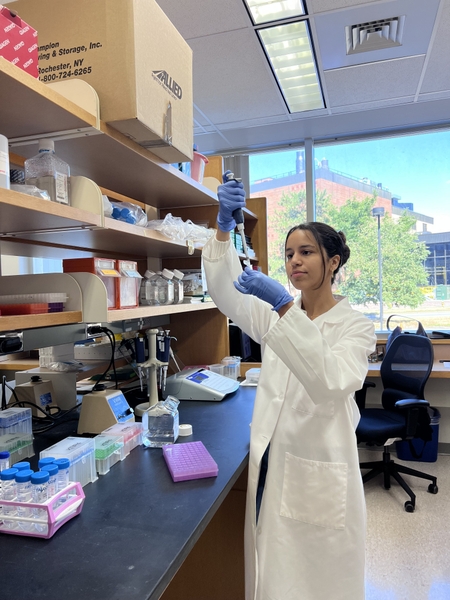
New York Institute of Technology College of Osteopathic Medicine: Collaboration Across Continents

In between completing his undergraduate studies at the University at Buffalo and beginning his first year at the College of Osteopathic Medicine (NYITCOM), Dongchan (Alex) Lee wanted to gain hands-on research experience in data science and medicine while he was home in Busan, South Korea. So, he connected with faculty at Dong-A University and accepted an offer to partake in what became a collaboration across continents. Learn More

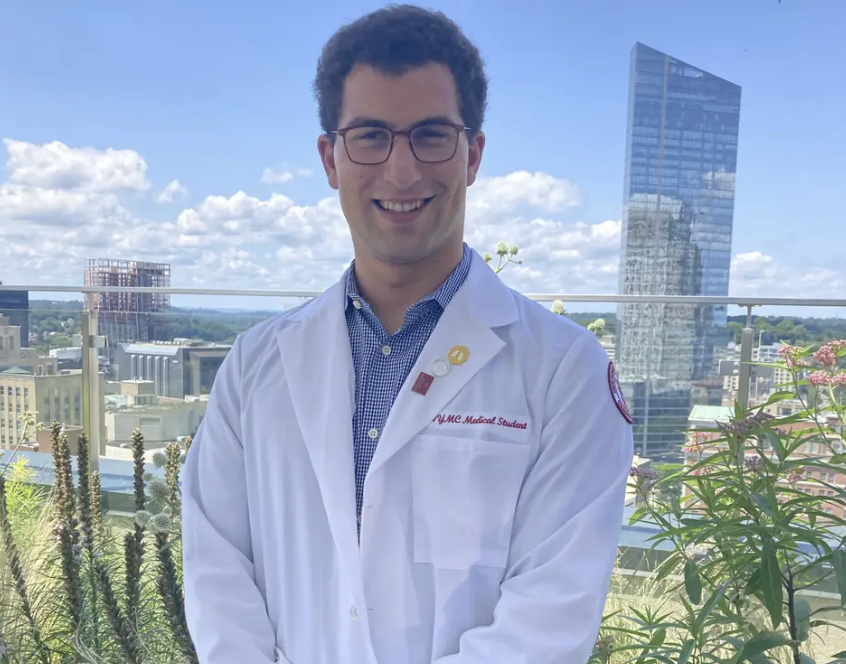
New York Medical College: Alcohol Use Disorder Associated with Worse Prognosis Following Brain Hemorrhage

A new study by New York Medical College faculty and students, published in Acta Neurochirurgica, reveals that patients with alcohol use disorder face markedly worse long-term outcomes after non-traumatic subarachnoid hemorrhage, a devastating neurological condition often caused by a ruptured aneurysm. “Alcohol use disorder affects one-in-eight SAH patients, making it critical that clinicians have a greater understanding of how alcohol use disorder, and alcohol use itself, affect patients’ prognosis and trajectory,” says Isaac Thorman, SOM Class of 2027, lead author on the study. Learn More

Zucker School of Medicine at Hofstra/Northwell: Importance of Providing Culturally Sensitive Care When Treating Alopecia in Head-Covering Women

Alex Silberzweig, a student at Zucker School of Medicine, was interviewed for the article “From the SOCU Poster Hall | Alopecia Care for Head-Covering Women” by Next Steps in Derm on Dec. 16. His poster, which was presented at Skin of Color Update, shared a comprehensive understanding of what head-covering women with alopecia experience and what changes dermatology clinicians can make to provide culturally sensitive care. Learn More

New York Medical College: Record Numbers, Remarkable Research Define 30th Medical Student Research Forum

A record number of medical students—more than 200—presented their research during the 30th annual Medical Student Research Forum on December 5, offering a vivid demonstration of the depth and promise of New York Medical College’s medical students, tomorrow’s scientific leaders. The Medical Education Center buzzed with energy as students showcased their research projects spanning an impressive range of topics, from comparative analyses of adult versus pediatric medulloblastoma and the antimicrobial potential of indigo naturalis in eczema treatment to socioeconomic disparities in hip arthroplasty outcomes, to advances in neuromodulation and neuro-ablative procedures for cancer pain management. Learn More

Grants & Awards

Albert Einstein College of Medicine: NIH Awards $10 Million for the New York Regional Diabetes Research Center

Albert Einstein College of Medicine has received a five-year, $10.8 million grant from the National Institutes of Health (NIH) to create the New York Regional Diabetes Research Center (NYR-DRC), a newly expanded multi-institutional center co-led with the Icahn School of Medicine at Mount Sinai and Weill Cornell Medicine. The center will focus on discovering scientific knowledge and translating it into improved care for people with diabetes and related metabolic diseases. Learn More

Icahn School of Medicine at Mount Sinai Awarded $6 Million NIH Grant to Advance Understanding of Down Syndrome

Researchers from the Icahn School of Medicine at Mount Sinai have been awarded a $6 million grant from the National Institutes of Health (NIH) to advance understanding of how an aging-related hormone known as follicle-stimulating hormone (FSH) may impact early-onset Alzheimer’s disease and co-occurring health conditions in individuals with Down syndrome. The grant is a Transformative Research Award through the INvestigation of Co-occurring conditions across the Lifespan to Understand Down syndromE (INCLUDE) program and the Office of the NIH Director. Learn More

More Studies

Columbia University Vagelos College of Physicians & Surgeons: For Teens, Any Cannabis Use May Have Impact on Emotional Health, Academic Performance

Using marijuana just once or twice a month is associated with worse school performance and emotional distress for teens, according to a large national study of adolescents led by Ryan Sultán, an assistant professor of clinical psychiatry at Columbia University Vagelos College of Physicians and Surgeons. The more frequently teens used cannabis, the more likely they were to report emotional distress and other social and academic problems. Learn More

Jacobs School of Medicine & Biomedical Sciences at the University at Buffalo: Family Grocery Purchases Improved When Online Grocery Carts Were Preloaded With Healthy Ingredients

UB researchers have shown that preloading Instacart online grocery carts with healthy ingredients could be a useful tool for improving the diets of families with young kids at risk for obesity. Published on Dec. 3 in Appetite, the randomized, controlled pilot study found that providing families with healthy recipes and then preloading online grocery carts via Instacart with the ingredients needed to make those recipes resulted in families making purchases that were significantly more nutritious compared to a group that received only the recipes. Learn More

University of Rochester School of Medicine & Dentistry: Farm-Living Families Develop Earlier Immune Maturation 

Children who grow up in farming communities have long been known to develop far fewer allergies than their urban peers. A new study from the University of Rochester Medical Center (URMC) offers one possible reason why: their immune systems may mature faster, and breast milk appears to play an important supporting role. In a longitudinal birth cohort comparing infants from Old Order Mennonite (OOM) farming families in New York’s Finger Lakes region with urban and suburban families in Rochester, researchers found that farm-exposed babies had more “experienced” B cells and higher levels of protective antibodies during the first year of life. Learn More

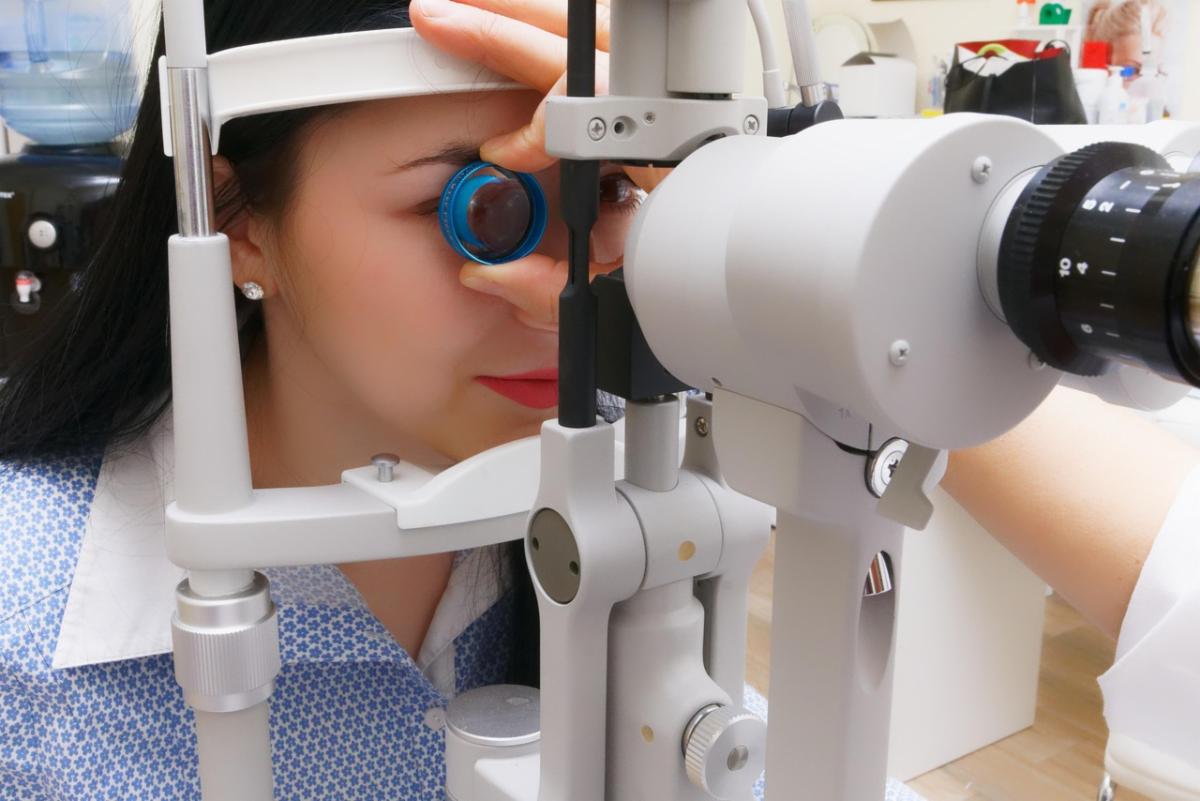
Zucker School of Medicine at Hofstra/Northwell: Finding a Quick, Noninvasive, Safe Method for Resolving Acute Loss of Vision 

Talia R. Kaden, MD, an associate professor of ophthalmology at the Zucker School of Medicine, published “Outcomes of Nd:YAG Laser Posterior Membranotomy in the Treatment of Macular Preretinal Hemorrhage: A Systematic Review and Meta-Analysis” in the American Society of Retina Specialists Journal of VitreoRetinal Diseases in the November/December issue. The study examined the success rate of neodymium-doped yttrium aluminum garnet (Nd:YAG) laser posterior membranotomy as a treatment option to facilitate drainage of macular preretinal hemorrhage into the vitreous cavity. Learn More

Thanks for signing up!

Stay up to date with the latest:

By submitting this form, you are granting: Associated Medical Schools of New York, 99 Park Ave, Room 2010 New York, New York, 10016, United States, http://www.amsny.org/ permission to email you. You may unsubscribe via the link found at the bottom of every email. (See our Email Privacy Policy for details.) Emails are serviced by Constant Contact.

Associated Medical Schools of New York (AMSNY)
The Voice of Medical Education
99 Park Ave, Suite 2010 New York, New York, 10016
All rights reserved by their respective owners. Privacy Policy | Disclaimer
© Copyright 2026 AMSNY