Associated Medical Schools of New York
  • About
    • Programs
    • AMSNY Scholars in Medicine and Science
    • AMSNY Scholarship in Medicine
    • Research
    • NYFIRST
    • ECRIP
    • SCIRP
    • Biomedical Research and Economic Development
    • Science Forward
    • Advocacy
    • State Positions
    • Federal Positions
  • News
  • Contact
Newsletter > Biomedical Research News from AMSNY: August 2026

09/03/2026

Biomedical Research News from AMSNY: August 2026

News from AMSNY

AMSNY Urges OMB to Withdraw Proposed Changes to Federal Grantmaking

For generations, the partnership between the federal government and America’s research institutions has made the United States a global leader in scientific discovery and the advancement of medicine. That continued success depends on a grantmaking system guided by scientific expertise, merit-based peer review, predictable funding and the ability to collaborate with the very best scientists around the world.

The Office of Management and Budget (OMB) has proposed sweeping revisions to regulations governing federal grantmaking, including the National Institutes of Health (NIH) and National Science Foundation (NSF). If implemented, these changes would give political appointees greater influence over funding decisions, allow agencies to suspend or terminate awards based on changing political priorities and impose new restrictions on international collaboration.

In its comments submitted to the OMB, the Associated Medical Schools of New York urged Director Vought to withdraw the proposed rule and work collaboratively with the research community and other stakeholders to develop a more measured approach that supports our shared goals of transparency and accountability while sustaining strong investments in the discovery of new treatments and cures and ensuring our leadership in an increasingly competitive global environment. AMSNY’s comments emphasized that:

  • Expanding decision-making authority to political appointees will create a less transparent system and harm scientific progress by compromising the strictly merit-based peer review process that has been the foundation of NIH grantmaking since World War II.
  • Expanding the federal government’s ability to suspend or terminate awards at any time will create significant uncertainty for our scientific workforce and potentially cost scientists and institutions years of progress while wasting taxpayer dollars.


  • International collaboration is essential to the advancement of science. New proposed restrictions on international collaborations will isolate our scientists and jeopardize the U.S.’ position as a global leader in biomedical research by imposing additional barriers to collaboration, including with close partners in the UK and Canada.

Highlights

Weill Cornell Medicine: Cooling the City

New York City is heating up. Weather data show summers bringing more hot days, heat waves arriving closer together and warmer nights, leaving less chance to cool off. This shift is more than uncomfortable; it’s dangerous. Every summer, heat contributes to or causes the deaths of an average of more than 500 New Yorkers. It also sickens an untold number of people. Older adults, young children and people with chronic medical conditions such as hypertension and diabetes run the most risk, as do those taking certain medications. Learn more.

Renaissance School of Medicine at Stony Brook University: The Lone Star Tick Is Bringing Another Infection Concern

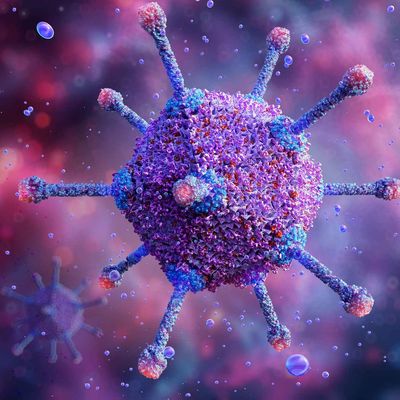
Tick-borne diseases are common throughout the United States, and most cases are treated effectively. A rare diagnosed tick-borne infection, the Bourbon virus, transmitted though the common lone star tick, could soon begin to complicate diagnoses if it becomes more prevalent this summer and in coming years. Learn more.

Neuroscience & Brain Health

Zucker School of Medicine at Hofstra Northwell: New Findings in Study Regarding Intramedullary or Invasive Disease

Medical student Sebastian Leon, and Daniel M. Sciubba, MD, a professor of neurology who are both from the Donald and Barbara Zucker School of Medicine at Hofstra/Northwell, published a study, “Intramedullary or invasive characteristics of spinal melanocytomas: a PRISMA compliant systematic review and pooled case analysis” in Springer Nature on May 28. After the completion of the study they found that the designation of primary meningeal melanocytomas as benign lesions may underestimate the oncologic potential of intramedullary or invasive disease. Learn more.

New York Medical College: GLP-1 Study Finds Survival Benefits Outweigh Cognitive Risks for Diabetics

The decreased risk of death for patients with type 2 diabetes treated with GLP-1 analogues outweighs the increased risk of cognitive impairment, though age plays a role, according to a study by New York Medical College students and faculty, presented at the American Academy of Neurology meeting in April. Learn more.

Albert Einstein College of Medicine: Study Reveals How Brain Remodeling During Adolescence Shapes Memory

Scientists have long known that the human brain continues developing well beyond the teenage years, with important changes involving decision-making and emotional regulation extending into the mid-to-late 20s. Now, for the first time, researchers at Albert Einstein College of Medicine have identified a biological process in mice that offers new insight into how memory circuits mature during this extended period of brain development. Learn more.

Jacobs School of Medicine & Biomedical Sciences at University at Buffalo: With the Help of AI, MS Researchers Can Now See Brain Lesions They Knew Were There but Couldn’t Previously See on Scans

An international team led by UB has developed a method that reliably measures cortical lesions strongly implicated in disability and cognitive issues in MS. One of the uncomfortable truths about multiple sclerosis is that the part of the brain likely to reveal the most about the disease and how a patient will be impacted has been mostly invisible to clinicians. Learn more.

University of Rochester School of Medicine & Dentistry: New Platform Combines Precision Gene Targeting with Brain-Wide Delivery

University of Rochester Medicine researchers developed a new gene therapy platform that uses the brain’s natural glymphatic transport system to deliver therapeutic genes broadly throughout the brain while targeting key support cells called glia. By helping gene therapies bypass the blood-brain barrier and reduce exposure to other organs, the approach could make future brain treatments safer and more effective. Learn more.

Cancer

Columbia University Vagelos College of Physicians and Surgeons: Measuring Cancer Structure – New Topology-Based Biomarkers May Improve Breast Cancer Prediction

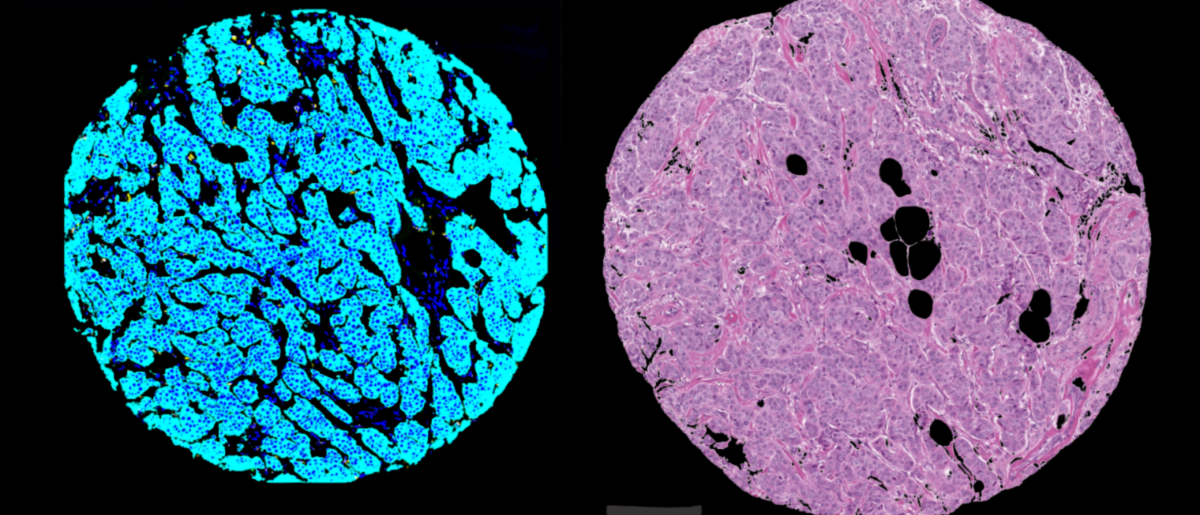
For decades, pathologists have diagnosed and graded breast cancer by looking at tissue samples under a microscope, searching for telltale signs of disorder in the structure of cells and tissues. Now, researchers at Columbia and their collaborators have developed a new computational approach that transforms those visual patterns into quantitative measurements, potentially improving how clinicians predict breast cancer outcomes and choose therapies. Learn more.

Icahn School of Medicine at Mount Sinai: New Treatment Approach Improves Survival and Reduces Recurrence Risk for Patients With Muscle-Invasive Bladder Cancer

Researchers have found that a combination of enfortumab vedotin and pembrolizumab helps patients with muscle-invasive bladder cancer live longer while reducing the risk that their cancer will return after surgery, according to an international phase 3 clinical trial published in The New England Journal of Medicine. Bladder cancer is the sixth most common cancer in the United States. The American Cancer Society estimates that nearly 85,000 Americans will be diagnosed with the disease this year. Learn more.

Albert Einstein College of Medicine: A Patient’s Journey – Research Changing What’s Possible in Metastatic Lung Cancer

Diagnosed with Stage IV metastatic lung cancer, including a brain tumor treated with radiation, Mr. Victor Hunter joined an innovative clinical trial run by Dr. Chandan Guha and his colleagues at Albert Einstein College of Medicine and Montefiore that combined targeted radiation with immune-stimulating injections. The approach eradicated all of his remaining tumors and significantly improved his quality of life, giving him the ability to enjoy meaningful time with his loved ones. This video shows what could become possible when research directly transforms patient care. Learn more.

University of Rochester School of Medicine & Dentistry: New Tool Makes Immune Therapy More Effective in Prostate Cancer

Prostate cancer is often resistant to immunotherapy, dubbed “immune cold” because it doesn’t attract immune cells to help destroy the tumor. Researchers at the University of Rochester Medicine developed a new CRISPR‑based tool that changes how prostate cancer cells make a specific protein, helping the immune system see and attack the tumor. The tool restores a key “flag” on cancer cells that acts like a magnet for immune cells, allowing immunotherapy to work much better in prostate cancer in mice. Learn more.

Renaissance School of Medicine at Stony Brook University: Study Shows Promise of New Approach to Treat Lung Cancer

The need for more effective lung cancer treatments is paramount given that the disease remains a leading cause of cancer deaths in the United States. New findings by a research team from the Stony Brook Cancer Center highlight a novel therapeutic that is shown to be highly effective in reducing non-small cell lung cancer (NSCLC) tumors and appears to halt drug resistance in a laboratory model. The paper is published early online in the journal Molecular Therapy. Learn more.

Women’s & Maternal Health

Albany Medical College: Neuroscience and OBGYN Researchers Collaborate on Menopause Study

At Albany Medical Center, the region’s only academic medical center, research ideas and collaborative partnerships often originate from unexpected places.

When Kristen Zuloaga, PhD, professor in Albany Medical College’s Department of Neuroscience and Experimental Therapeutics, presented her work on menopause in mouse models to Obstetrics & Gynecology clinicians, she wasn’t looking for ideas for new avenues of study.

But then Cara Grimes, MD, vice chair of research in OBGYN, asked about the effects of low dose testosterone (T) therapy on these mouse models. Learn more.

NYU Grossman School of Medicine: Exposure to Weed Killer During Pregnancy May Increase Risk of Preterm Birth

Exposure to a widely used herbicide during the middle months of pregnancy may increase the chance of giving birth too early, before 37 weeks, a new NYU Grossman School of Medicine study shows. The investigation focused on glyphosate, the active chemical ingredient in professional-grade Roundup products, which are sprayed on commercial food crops, like grains and legumes, and on residential gardens. Residues of the chemical have been detected in cereals, snack foods, and fresh fruits and vegetables. Learn more.

Columbia University Vagelos College of Physicians and Surgeons: Leading ARPA-H-Funded Effort to Transform Childbirth Through AI-Powered Maternal–Fetal Monitoring

A Columbia-led team has received a Phase I award of up to $5 million from the Advanced Research Projects Agency for Health (ARPA-H) to develop HARMONI—an AI-powered wearable monitoring system designed to give clinicians continuous, objective insight into the health of mother and baby during labor. Columbia will serve as the lead coordinating institution. The project is one of eight selected in the inaugural year of ARPA-H’s Making Obstetrics Care Smart (MOCS) program, a four-year initiative to make the United States the safest place in the world to give birth. Learn more.

Awards & Grants

Zucker School of Medicine at Hofstra Northwell: Student Adrian Chen Awarded National AHA Scholarships For Heart Research

The Donald and Barbara Zucker School of Medicine at Hofstra Northwell is proud to announce that Adrian Chen, a dedicated medical student, has been awarded both the American Heart Association’s (AHA) Student Scholarship in Cardiovascular Disease and Stroke and the prestigious Howard S. Silverman Scholar Award, which recognizes Chen as the top-scoring applicant nationally in a highly competitive field of aspiring physician-scientists. These honors provide Chen with a total of $3,000 to support his research into giant cell myocarditis (GCM), a rare and often fatal inflammatory heart disease. Learn more.

Weill Cornell Medicine: $2.5 Million Department of Defense Grant Funds Development of Targeted Therapy for Triple-Negative Breast Cancer

Weill Cornell Medicine has received a $2.5 million, three-year grant from the Department of Defense (DoD) to develop therapies with fewer side effects for triple-negative breast cancer, one of the most aggressive and difficult-to-treat breast cancers. The highly competitive DoD Breast Cancer Research Program Breakthrough Award supports innovative projects with strong potential to transform breast cancer treatment. Learn more.

New York Institute of Technology College of Osteopathic Medicine: Student Receives American Heart Association Scholarship

Emma Koval, a student researcher from the College of Osteopathic Medicine (NYITCOM), has been awarded the American Heart Association’s (AHA) Student Scholarship in Cardiovascular Disease. Each year, the prestigious $2,000 award recognizes student research related to cardiovascular disease, cerebrovascular disease, or stroke across basic, clinical, translational, or population science fields. Learn more.

More Studies

Icahn School of Medicine at Mount Sinai: Study Detects Immune Changes Up to 10 Years Before Inflammatory Bowel Disease Is Diagnosed

Researchers at the Icahn School of Medicine at Mount Sinai have identified immune system changes that can be detected up to 10 years before inflammatory bowel disease (IBD) develops, offering new insight into how the disease begins. Published July 21 in Gut, the study is one of the most comprehensive investigations to date of the preclinical phase of IBD. Learn more.

New York Medical College: Late-Night Snacking May Affect Gut Health

The combination of chronic stress and late-night eating appears to amplify the negative effect on gut health, according to a new study led by Harika Dadigiri, M.D., an internal medicine resident in New York Medical College’s Internal Medicine Residency Program at Saint Mary’s and St. Clare’s Hospital, and presented at Digestive Disease Week in May. Learn more.

Jacobs School of Medicine & Biomedical Sciences at University at Buffalo: Trauma Triage is Challenging – A UB Study Assesses How AI Might Help Improve Accuracy

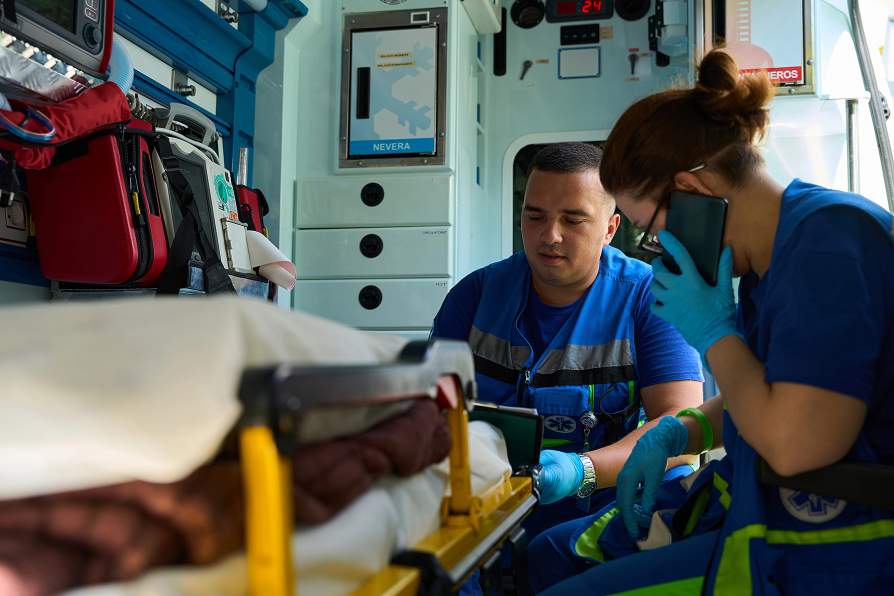
Making triage decisions in a busy emergency room is tough enough; making triage decisions based on a hurried call with emergency medical staff responding at the scene of an accident is all the more challenging. Surgeons and trainees in the Jacobs School of Medicine and Biomedical Sciences at the University at Buffalo wondered if artificial intelligence, specifically large language models (LLMs), could help improve the accuracy of the initial emergency medical services (EMS) information, which would, in turn, better prepare the hospital trauma team. Learn more.

Thanks for signing up!

Stay up to date with the latest:

By submitting this form, you are granting: Associated Medical Schools of New York, 99 Park Ave, Room 2010 New York, New York, 10016, United States, http://www.amsny.org/ permission to email you. You may unsubscribe via the link found at the bottom of every email. (See our Email Privacy Policy for details.) Emails are serviced by Constant Contact.

Associated Medical Schools of New York (AMSNY)
The Voice of Medical Education
99 Park Ave, Suite 2010 New York, New York, 10016
All rights reserved by their respective owners. Privacy Policy | Disclaimer
© Copyright 2026 AMSNY